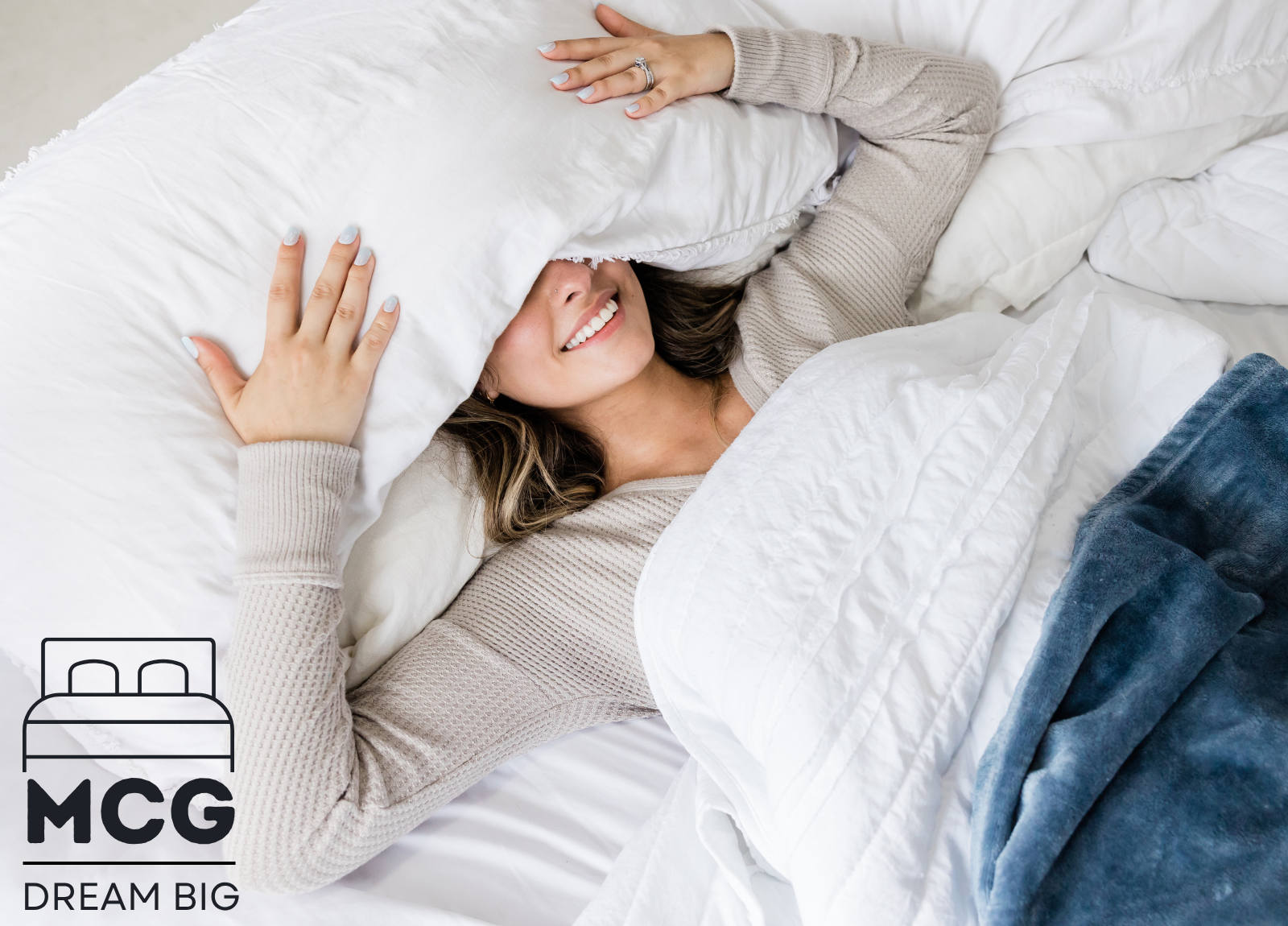
Waking up drenched and overheated ruins sleep. This common frustration has a core cause: your mattress. This article tackles “The Night Sweats: Why Your Mattress Retains Heat and How to Stay Cool“. We will explain the science of sleep temperature and provide clear solutions for a cooler, more restful night.
Key Takeaways
- Your body and mattress materials together cause sleep overheating.
- Memory foam is a common culprit for heat retention.
- Breathable covers and cooling toppers are instant fixes.
- Your room environment is as important as your bed.
- New cooling technologies offer powerful solutions.
Why Your Mattress Feels Like a Furnace
You generate heat all night. Your body’s core temperature must drop to initiate and maintain sleep. A good mattress dissipates this heat. A bad one traps it. Heat retention happens at two levels. First, your body heat builds up. Second, mattress materials react to and hold that heat. This creates a microclimate around you. It becomes humid and hot. This disrupts your sleep cycle. You toss and turn. You wake up fatigued. Understanding this process is the first step to fixing it.
The Usual Suspects: Materials That Trap Heat
Not all mattresses sleep the same. Material choice is critical. Traditional memory foam is the biggest offender. Its dense, viscous structure conforms closely. This limits airflow around your body. The foam also absorbs your radiant heat. It then releases it back to you. Lower-quality polyurethane foams act similarly. They use closed-cell structures. These structures block air movement. Even some pillow-top layers can be problematic. They often contain fibrous padding. This padding can act like an insulator. It holds warmth like a blanket.
The Cool Crowd: Materials That Promote Airflow
Some materials excel at temperature regulation. Latex foam is a star performer. It can be natural or synthetic. Its open-cell structure allows continuous air circulation. Air flows through it easily. This carries heat away from your body. Innerspring and hybrid mattresses also cool well. Their coiled cores create large air channels. Heat rises through these channels. It escapes from the mattress surface. Newer gel-infused foams and phase-change materials also help. They absorb heat actively to create a cooler feel.
Your First Defense: Mattress Protectors & Pads
You do not need a new mattress immediately. Start with your surface layer. Your mattress protector matters greatly. A basic vinyl or plastic protector seals in heat. It is a barrier. Swap it for a breathable alternative. Look for protectors made from cotton or bamboo. These are natural fibers. They wick moisture and permit airflow. Consider a cooling mattress pad or topper. These are game-changers. Gel-infused or graphite-infused toppers pull heat away. Moisture-wicking wool toppers regulate temperature naturally. They provide a buffer between you and the warm mattress.
The Power of Your Sleep Environment
Your bedroom setup is crucial. It works with your mattress. Start with thermostat settings. Experts recommend a room temperature between 60-67°F. This supports your body’s natural cooling. Use fans to boost air movement. A ceiling fan is ideal. It circulates air across the entire bed. Do not underestimate your bedding. Heavy comforters hold heat. Switch to lightweight, breathable options. Look for sheets made from linen, cotton percale, or bamboo. These fabrics are highly breathable. They feel cool to the touch. Moisture-wicking pajamas made from cotton or technical fabrics can also help.
Choosing a Cool Mattress: A Buyer’s Guide
When shopping, focus on construction. Ask about the comfort layer. Avoid thick, solid memory foam. Look for ventilated or open-cell foam. Mattresses with coils usually sleep cooler. Hybrid models combine coils with foam. They offer support and cooling. Check for integrated cooling features. Many brands now include gel beads or copper infusions. These materials draw heat away. Phase-change covers are another technology. They absorb excess heat as you warm up. Always read reviews about sleep temperature. Real user feedback is invaluable. This guides you to a truly cool choice.
Advanced Solutions

The market evolves quickly. Brands now offer advanced cooling. Some mattresses use graphite or charcoal infusions. These materials conduct heat away efficiently. Hydro-cooled surfaces use water-based fluids. They circulate through tiny channels. Other designs incorporate breathable 3D mesh panels. These panels replace traditional fabric. They allow maximal airflow. Consider an adjustable bed base too. Raising your head slightly improves circulation. This can reduce the feeling of overheating. Our exploration of “The Night Sweats: Why Your Mattress Retains Heat and How to Stay Cool” shows that innovation is on your side.
When to Take Drastic Action
Sometimes adjustments are not enough. Your mattress may be the true problem. This is true for older all-foam beds. They degrade over time. Their support and breathability fail. If you constantly wake up hot, consider a replacement. Invest in a mattress designed for cool sleep. Prioritize materials like latex or innerspring. Your sleep quality is worth the investment. A cool mattress is a foundation for health.
Bringing It All Together for a Cool Night’s Sleep
Fixing night sweats is a system approach. Start with quick wins. Change your sheets and room temperature. Add a cooling topper for immediate relief. Then assess your mattress. Understand its materials. Plan for a cooler future purchase. Remember the principles of airflow and conduction. Your goal is to break the heat-retention cycle. This is the core message of “The Night Sweats: Why Your Mattress Retains Heat and How to Stay Cool”. You can reclaim comfortable, uninterrupted sleep.
READ NEXT
Choosing the Right Mattress Size
Stop Flat Sheets Sliding Off Your Mattress
Dispose of a Mattress for Free
Summary of Prominent References & Concepts
Sleep Core Temperature
The body’s need to lower its internal temperature to initiate sleep.
Microclimate
The immediate environment of heat and humidity between your body and the mattress.
Open-Cell vs. Closed-Cell Foam
Refers to the internal structure of foam; open-cell allows airflow, closed-cell traps air.
Phase-Change Materials (PCMs)
Substances that absorb and release thermal energy to maintain a consistent temperature.
Thermoregulation
The body’s process of maintaining its core internal temperature.
Wicking
The movement of moisture (sweat) away from the body to a fabric’s surface where it can evaporate.
Senior Editor
Josh is senior editor at Mattress Comfort Guide. He is an industry expert with over 30 years of experience in the bed and mattress industry. Josh is a native of Albuquerque and is a graduate of the University of New Mexico. He holds an M.S. in Project Management and a B.S. in Earth & Planetary Sciences.
He has worked in both the retail and manufacturing industries where he has held consultancy roles on mattress design and technologies. Josh has a particular interest in how different mattress types complement body size and sleeping position, and deliver optimal lumbar support. Josh is a keen sports fan and when he’s away from the office he likes to play basketball and catch the New Mexico Lobos games with his two sons at the Pit.